Best budget robot lawn mower (2026): entry-level models compared
Spending less on a robot mower is possible, but each step down the range takes something away. We compared the entry-level models we cover and explain what you give up, so you can decide which compromises your lawn can live with. Current prices are on each card.
We may earn a commission when you buy through our links.
Updated
Compared 5 products
Based on Shop and manufacturer information, not our own tests
3D LiDAR (OmniSense), no boundary wire or RTK station
Lawn area
up to 2,000 m²
Max slope
up to 45%
Cutting width
22 cm
Compare side by side
Choose up to three products. Rows where they differ are highlighted.
What makes a robot lawn mower a budget model?
Less of everything that costs money to build: a smaller rated lawn area, a narrower cutting deck, fewer sensors and simpler navigation, often a boundary wire. The mowing itself is much the same. A budget robot still trims little and often and leaves the clippings as mulch. What changes is how much lawn, slope and clutter it can handle.
That is why the right budget mower depends on your garden more than on the price tag. A flat 300 m² lawn with no trees asks very little of a robot. A sloping lawn under oaks asks a lot, and an entry-level machine may struggle. Measure first with the lawn size calculator so you do not pay for capacity you will never use.
What do you give up with a cheap robot lawn mower?
Usually four things: the wire-free setup, slope ability, lawn area and obstacle detection. A wired model needs the loop laid before it can mow. Lower-end models climb 30 to 35% rather than 45% or more. They are rated for around 500 m². And a simple bump sensor stands in for a camera or LiDAR that recognises objects.
Edge cutting and app features have spread down the range, so they are less of a sacrifice than they once were. Every model on this page has an app and an edge-cutting feature. Noise varies too: Worx gives 67 dB for the M500 Plus, while Segway gives 58 dB(A) for the i105E. Weigh each loss against your own lawn rather than a feature list.
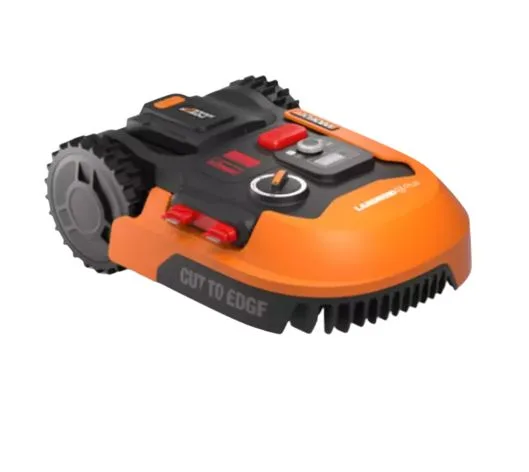
Is a wired budget mower like the Worx Landroid M500 Plus a good choice?
Yes, for a flat or gently sloping lawn of up to 500 m² that does not change shape. The boundary wire is proven technology, and once laid it rarely needs attention. Worx rates the M500 Plus for 35% slopes and gives it Cut-to-Edge, a rain sensor and a deck you can wash with a hose.
At 9.5 kg it is easy to lift, and it cuts 18 cm at 30 to 60 mm. The compromise is installation: the wire has to go round the lawn and every bed, and a spade through the loop stops the mower until you repair it. If that sounds manageable, it is the machine we would start with. The perimeter wire guide explains the loop and how to fix a break.
Can you get a wire-free robot mower at the lower end of the range?
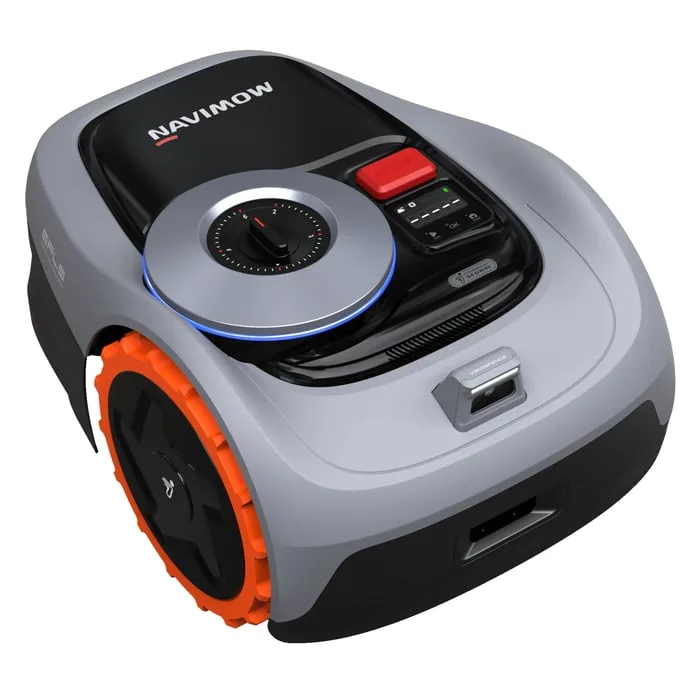
Yes. The Segway Navimow i105E is a compact wire-free mower that uses RTK and a camera rather than a boundary wire. Segway rates it for 500 m² and 30% slopes and says its VisionFence camera recognises more than 150 types of obstacle. You map the lawn by steering it round the edge once in the app.
Compared with the M500 Plus, you swap a slightly lower slope rating for no wire at all and better obstacle recognition. RTK does need a fairly open sky, so a lawn hemmed in by tall trees or buildings is a poorer fit. Other wire-free models across the range are on our robot lawn mower without perimeter wire page.
When is it worth stepping up for LiDAR or all-wheel drive?
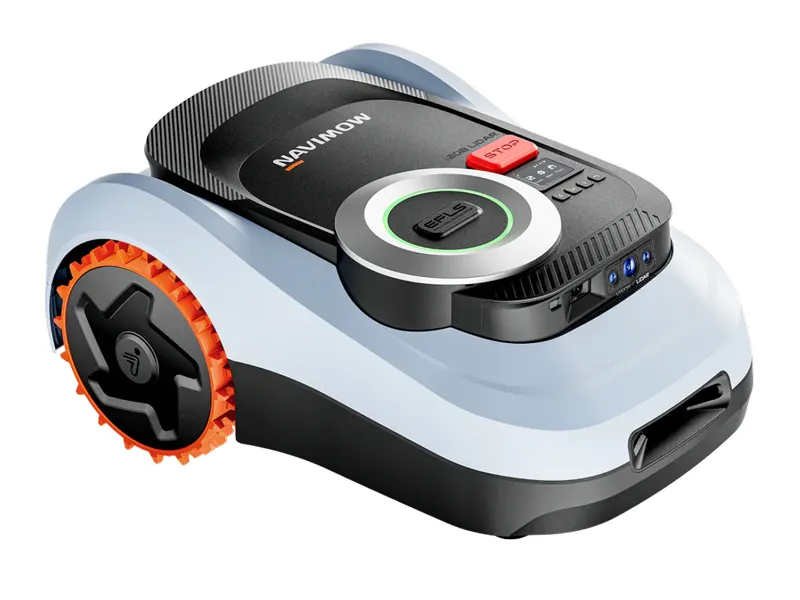
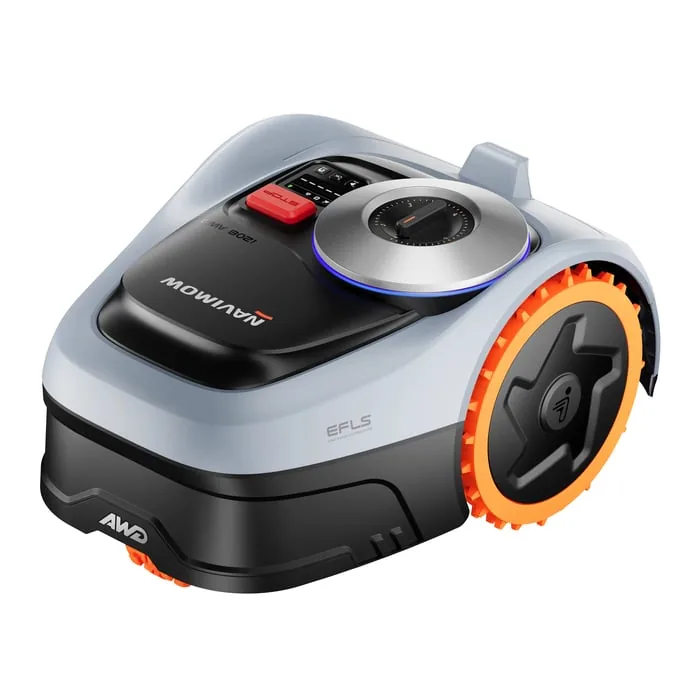
When your garden would defeat an entry-level machine. Two situations stand out: a lawn shaded by trees or the house, where LiDAR navigates better than RTK, and a sloping lawn, where all-wheel drive keeps grip. The Segway Navimow i208 LiDAR and i208 AWD answer those two problems for lawns of up to 800 m².
Both climb 45%, cut 21 cm at 30 to 60 mm and, according to Segway, run at 59 dB(A). The i208 LiDAR scans its surroundings with a 3D laser and a camera, so it needs no antenna. The i208 AWD drives all its wheels and uses network RTK, with access and the mobile data it needs included; check coverage at your postcode first. See the robot lawn mower for slopes page if your lawn is steep.
Which model on this list suits a big lawn?
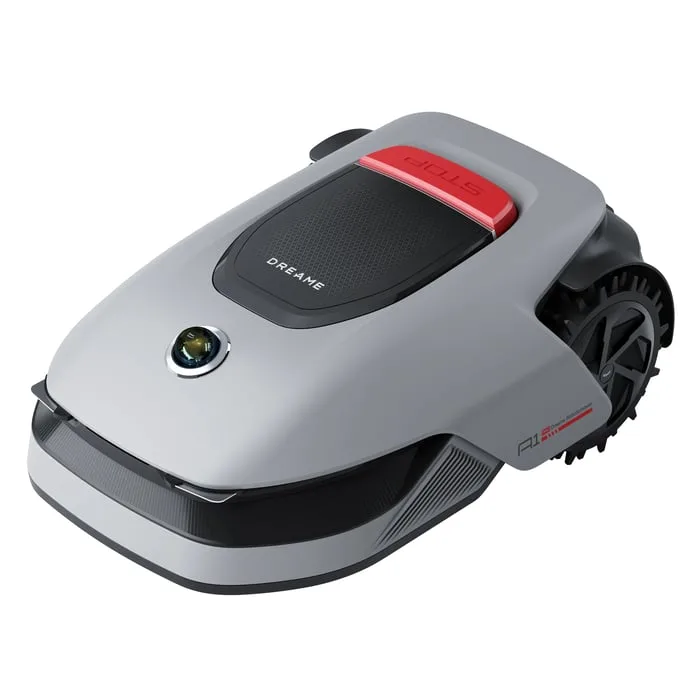
The Dreame A1 Pro, because it needs nothing installed beyond its charging station. It maps with a 3D LiDAR, needs no wire and no RTK station, and Dreame rates it for 2,000 m² and 45% slopes. On a large plot that spares you laying and pegging a boundary wire round the whole lawn.
Be realistic about its pace. Dreame says the A1 Pro mows about 1,000 m² in 24 hours in standard mode, so the full rating needs its efficient mode. It is two-wheel drive, with off-road tyres. Bigger models are compared on our robot lawn mower for large gardens page.
Are Lidl and Aldi robot mowers worth considering?
They can be, for a small, simple lawn, but treat them as limited-time stock rather than a range. Lidl and Aldi sell robot mowers under their own garden brands as seasonal offers. Before you buy, check the navigation type, rated lawn area and slope, and whether blades and spare parts will still be available in a few years.
We do not include them in our comparison, because the models come and go and we cannot keep the specifications current. The same questions apply to any low-cost machine: does it need a boundary wire, can it climb your steepest bit of lawn, and how long is the warranty? Our guide on how to choose a robot lawn mower lists what to check, and the best robot lawn mower page compares the full range.
What running costs come on top of the mower?
Mainly blades, and for wired models the occasional wire repair. Robot mowers use small blades that need replacing during the season, and a few connectors for the loop are worth keeping in the shed. Electricity use is small. Some models need a mobile data connection, so check whether that is included before you buy.
On the models here, Segway includes network RTK and its mobile data with the i208 AWD. Camera-only mowers from eufy need Wi-Fi or 4G, and a 4G data plan if Wi-Fi does not reach the lawn. A garage or cover is optional. Storing the mower indoors over winter is free and kinder to the battery; see robot mower winter storage.
Common questions
What is the best budget robot lawn mower?
If you are happy to lay a boundary wire, our budget pick is the Worx Landroid M500 Plus: a light, proven machine for lawns up to 500 m². If you want to skip the wire, the Segway Navimow i105E covers the same lawn size with RTK and a camera. Current prices are shown on each card.
Does a budget robot mower need a perimeter wire?
Not necessarily. Wire-free navigation used to be reserved for the top of the range, but the entry-level end now includes models such as the Navimow i105E that use RTK and a camera instead. A wired mower like the Worx M500 Plus still asks for the wire to go round the lawn and every bed.
Can I lay the perimeter wire myself?
Yes. The wire is pegged onto the turf or laid just under it, round the lawn edge and around beds and trees, then joined to the charging station. It takes time on a complicated lawn, and the grass grows over the pegs in a few weeks. Our perimeter wire guide covers spacing and repairs.
Is a second-hand robot mower a sensible way to spend less?
It can be, with care. Ask about battery age and how many seasons it has run, check that the blades and wheels are in good order, and make sure the seller removes the mower from their app account and gives you the PIN. Without that, you may not be able to use it.
Do entry-level robot mowers have an app?
All five models on this page do. Worx gives the M500 Plus Wi-Fi and Bluetooth app control, and the Navimow models are set up and mapped through Segway's app. The app is where you set the schedule, the cutting height on some models, and no-go zones on wire-free ones.
Should I buy a mower sized exactly for my lawn?
Leave a little headroom. A rated area is a maximum under good conditions, and beds, trees and slopes slow a mower down. If your lawn is close to 500 m² or has a complicated shape, an 800 m² model is less likely to fall behind in May and June.
How we compared
We picked the models at the lower end of the range we cover and compared what each one gives up: navigation, rated lawn area, slope, obstacle detection and installation work. Prices on the cards come from the shops and update automatically, so we do not quote them in the text.
A dash in the table means that neither the shop nor the manufacturer gives the figure. The awards are our editorial choice, and each card explains why. Our method is set out on the How we compare page.
Mowfriend chooses and ranks the products on its own. No manufacturer or shop can influence the order.