Best robot lawn mower 2026: our picks for UK gardens
A small, open lawn, a garden full of trees or a steep bank each need a different machine. We compared robot lawn mowers on navigation, lawn area, slope and cutting width to find the best robotic lawn mower for each kind of UK garden.
We may earn a commission when you buy through our links.
Updated
Compared 12 products
Based on Shop and manufacturer information, not our own tests
Choose up to three products. Rows where they differ are highlighted.
Which is the best robot lawn mower for most UK gardens?
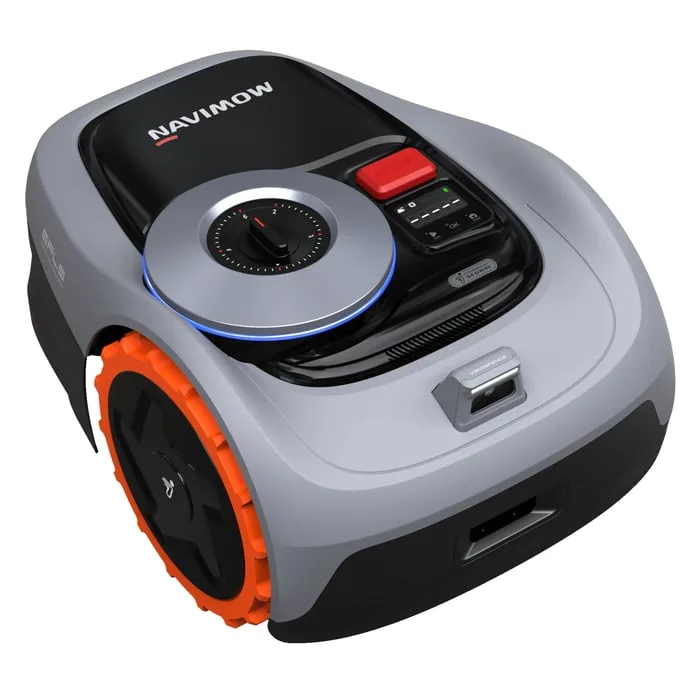
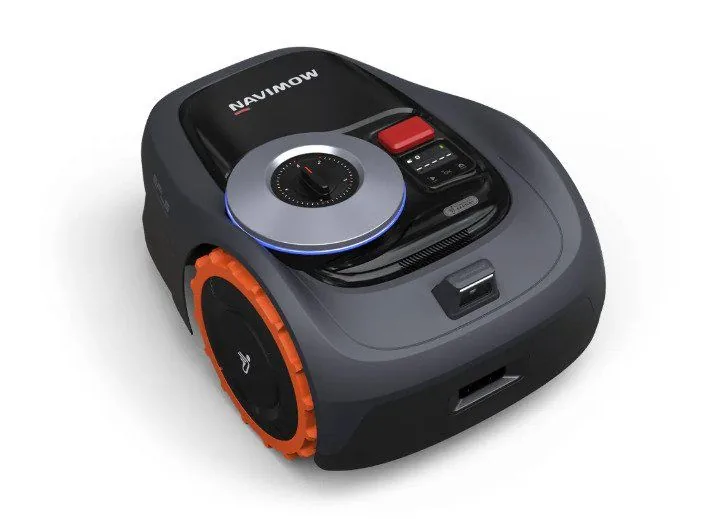
For a typical open lawn of up to about 500 m², our pick is the Segway Navimow i105E. It needs no perimeter wire, finds its position with RTK satellite correction and a camera, and Segway says the camera recognises more than 150 types of obstacle. It is small, light and simple to set up.
Setting it up means walking the mower round the edge of the lawn once with the app, which then draws the boundary. Because the i105E combines RTK with camera mapping, it keeps its place where the satellite signal drops for a moment, near a fence or under a young tree. It climbs slopes up to 30%, which covers most gently sloping suburban gardens. If your lawn is a little bigger, the Navimow i108E uses the same approach for up to 800 m².
Which robot lawn mower works best in a garden with trees?
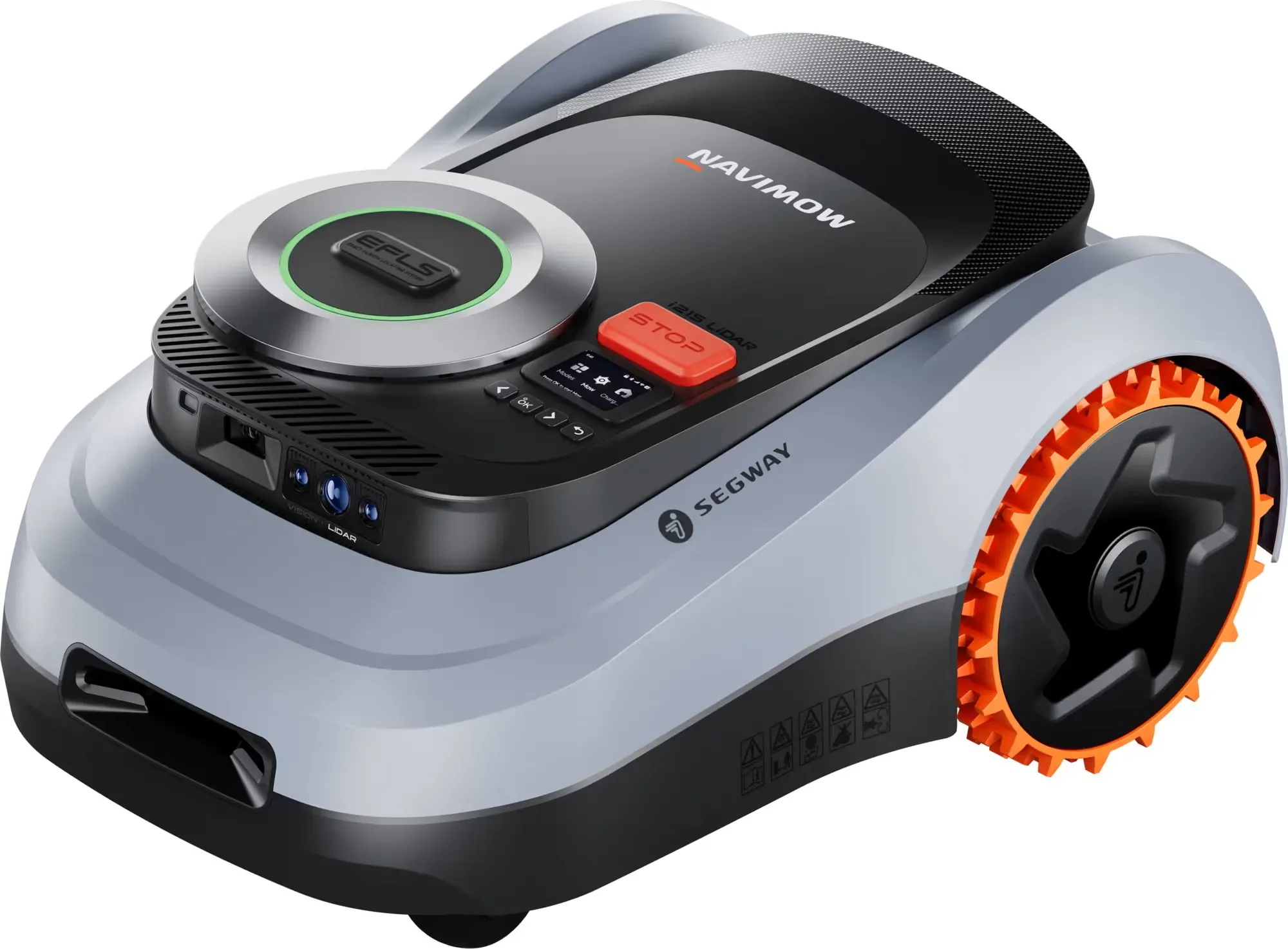
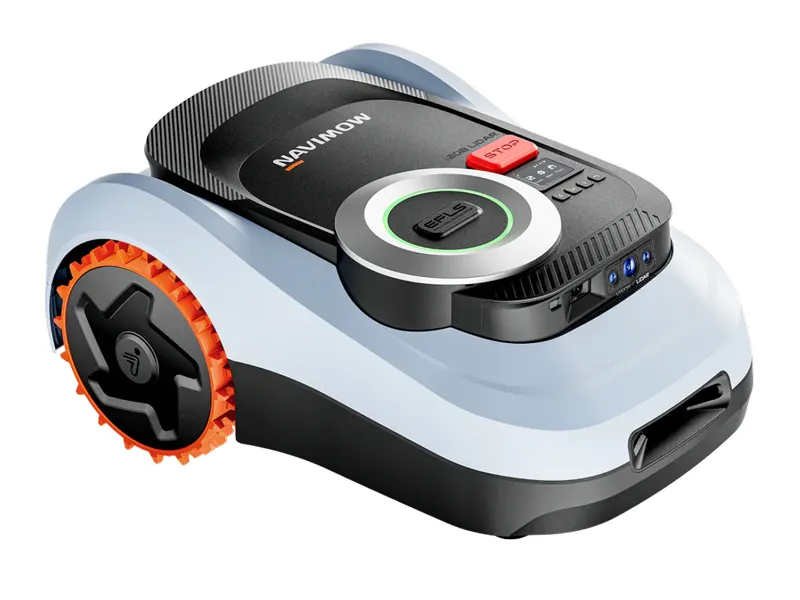
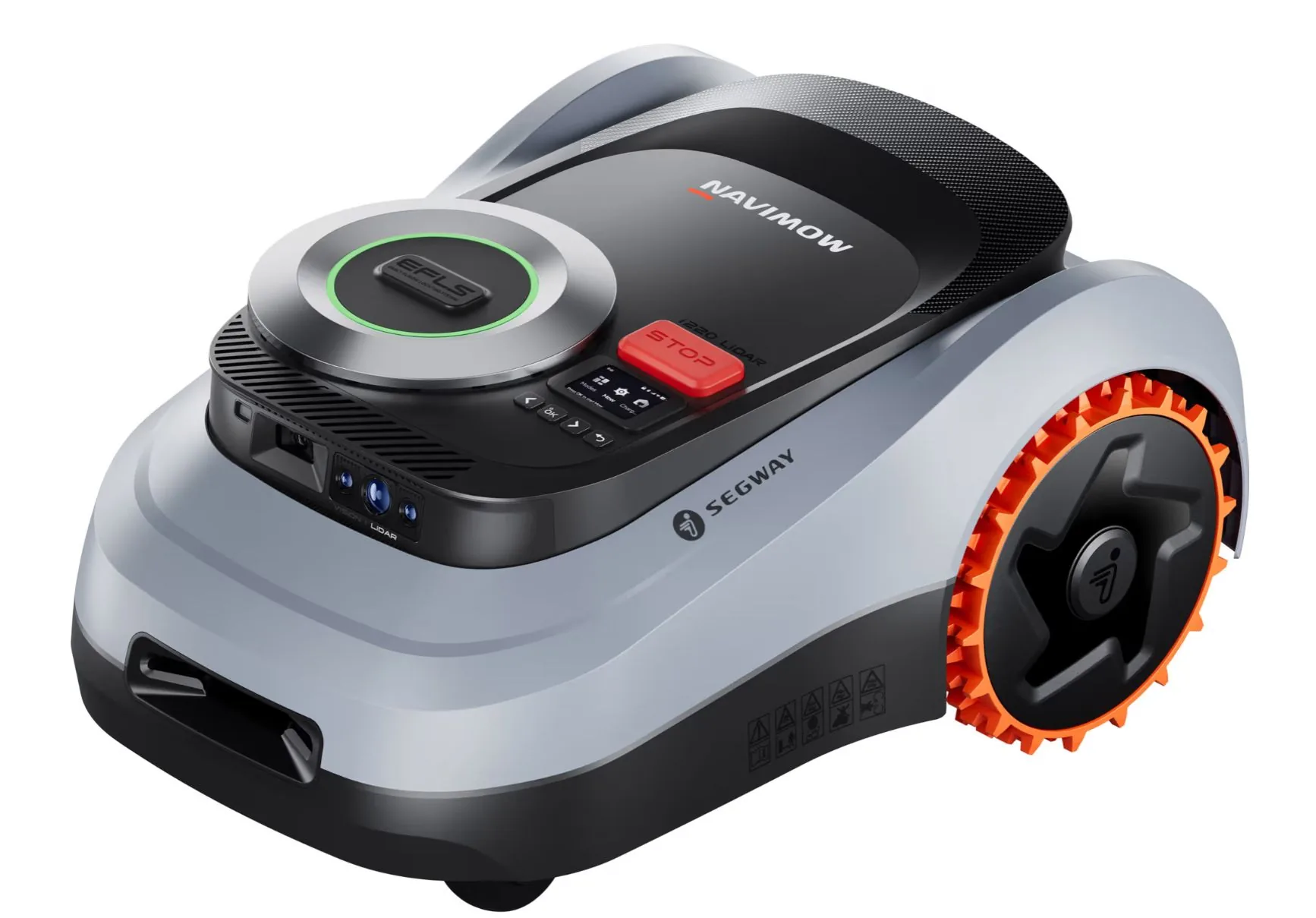
A LiDAR mower, because it does not depend on a clear view of the sky. Our pick is the Segway Navimow i215 LiDAR. It maps the garden with 3D LiDAR and a camera, needs no RTK antenna, covers up to 1,500 m² and climbs 45% slopes. Segway says it detects more than 200 types of obstacle.
RTK mowers locate themselves from satellites. Tall trees, a high hedge or the wall of the house can block part of the sky, and the mower then loses accuracy close to them. LiDAR measures the distance to fixed points such as walls, trunks and fences instead, so it works under a canopy and, according to Segway, at night too. The RTK vs LiDAR vs vision guide explains how the three systems differ, and every laser-guided model is on the page for LiDAR robot mowers.
What is the best robot mower for a steep garden?
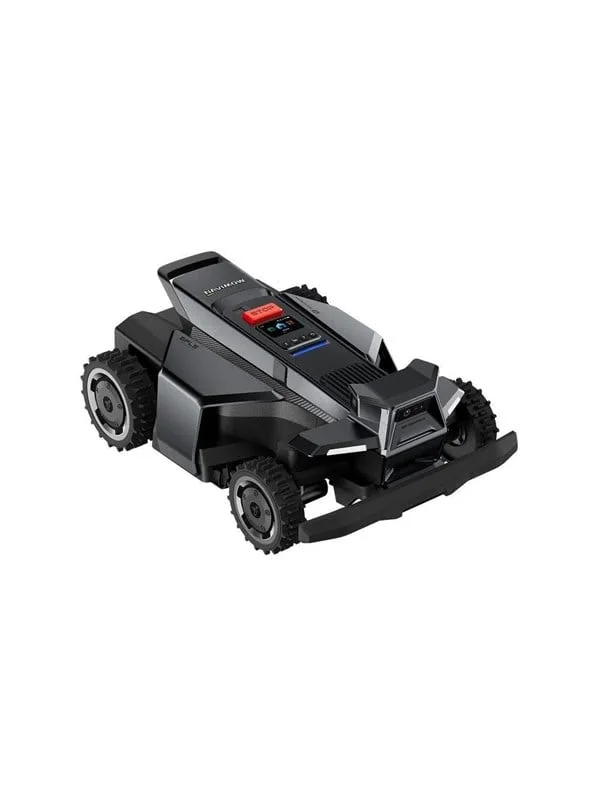
The Segway Navimow X420E. Segway rates its four-wheel drive for slopes up to 84%, the steepest figure in our comparison and far more than the 30% to 45% the other models manage. It cuts a 43 cm strip with two floating discs and covers up to 2,000 m², so it also suits a large hillside lawn.
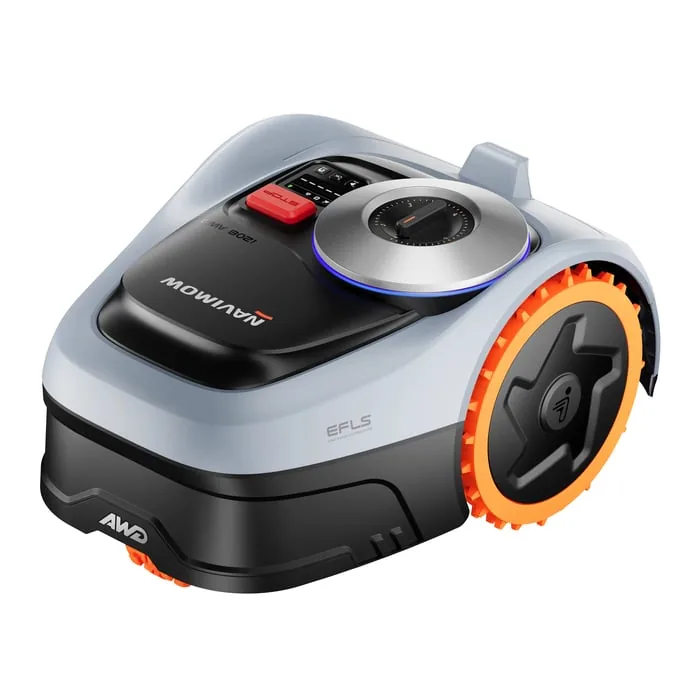
A slope given as a percentage is the rise over the run: 45% means 45 cm of height over one metre of ground, about 24 degrees. Measure the steepest part of your lawn before you choose, not the average. The X420E is heavy at 28.8 kg, which matters if you have to carry it up garden steps. For medium sloping lawns, the Navimow i208 AWD offers all-wheel drive for 45% slopes on up to 800 m². More options are on the page for robot mowers for slopes.
Is a camera-only robot mower good enough?
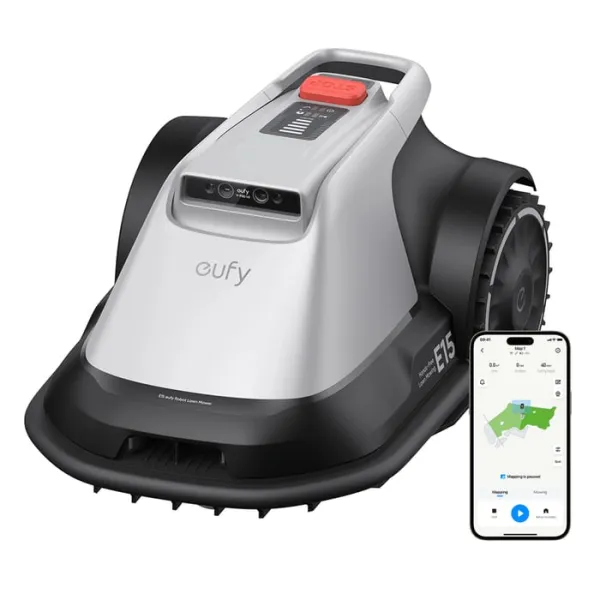
For a reasonably flat lawn with good Wi-Fi or 4G, yes. The eufy E15 navigates by camera alone, with no wire and no RTK station to put up, and covers up to 800 m² and 40% slopes. eufy says its Ride-on-Edge mode mows right up to the lawn edge, which saves trimming.
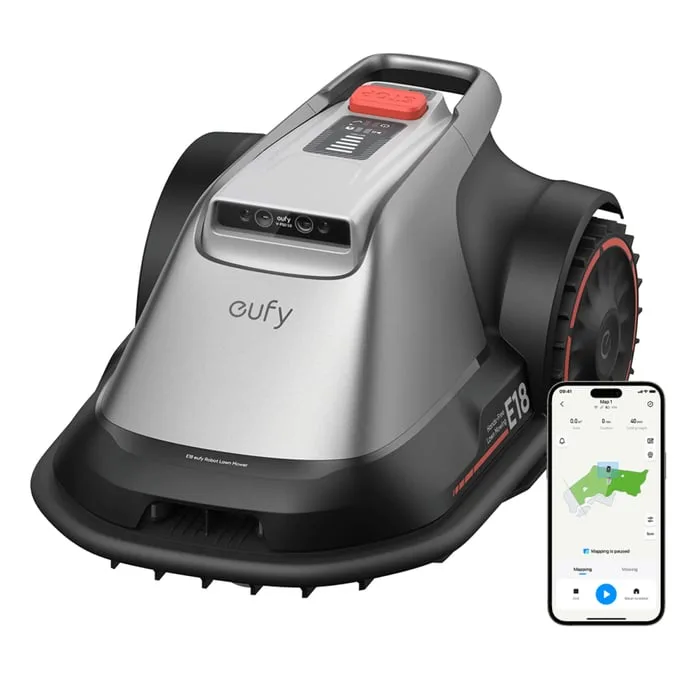
The trade-offs are worth knowing. eufy says the E15 needs a stable Wi-Fi or 4G signal in the garden, with a data plan if Wi-Fi does not reach, and works best where the surface varies by less than 3 cm. A bumpy lawn or one at the far end of a long garden can be a poor match. For lawns up to 1,200 m², the eufy E18 uses the same system. Both are among the robot mowers without a perimeter wire.
Is a robot mower with a perimeter wire still worth buying?
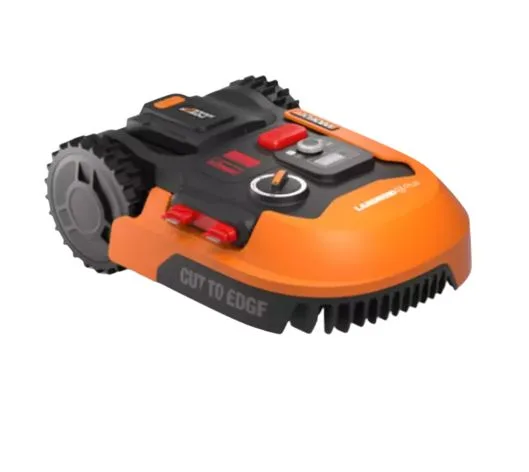
Yes, if you are happy to lay a wire once. Our pick is the Worx Landroid M500 Plus. A boundary wire does not depend on satellites, light or a phone signal, so it mows the same way every time. Worx adds Cut-to-Edge, a rain sensor and a deck you can wash with the hose.
The work comes at the start: the wire has to go round the lawn and every flower bed, pegged down or buried a few centimetres deep. Once the grass grows over it, it is hard to see, but scarifying or edging can cut through it. The M500 Plus weighs 9.5 kg, climbs 35% slopes and covers up to 500 m². Our guide to the perimeter wire explains how to lay and repair one, and the Worx Landroid page shows both Landroid models.
Which robot lawn mower suits a large garden?
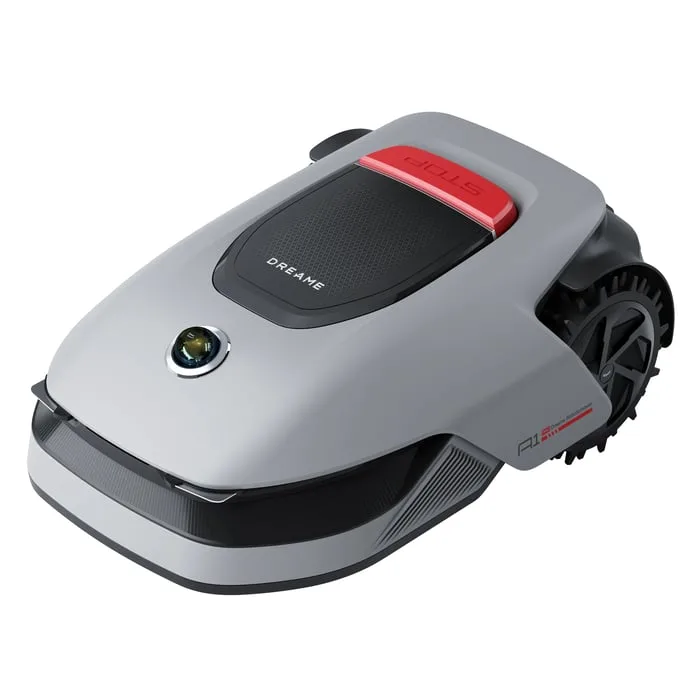
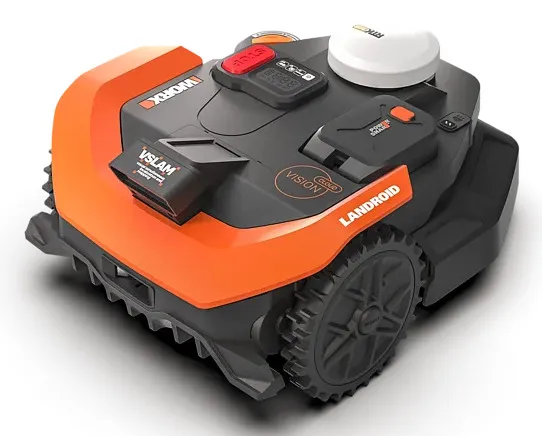
For a big garden with trees and buildings round the lawn, the Dreame A1 Pro: 3D LiDAR with a 70 m range, no RTK station and up to 2,000 m². For a big, fairly open lawn, the Worx Landroid Vision Cloud L1800 uses cloud RTK with no antenna to mount and covers up to 1,800 m².
Look at how much a mower cuts per day, not only its maximum area. Dreame says the A1 Pro covers 1,000 m² in 24 hours in standard mode, so the full 2,000 m² needs its efficient mode. The L1800 receives its RTK corrections over Wi-Fi or 4G, with the service included, and has electric cutting height adjustment, but stops at 30% slopes. Our page on robot mowers for large gardens covers the bigger machines.
How should you read robot lawn mower reviews?
Check whether the reviewer's garden looks like yours. A mower praised on a flat, open 300 m² lawn may struggle on a 900 m² plot with trees and a bank. Look for the lawn size, the slope, the navigation type and how long the mower was used, and treat launch-week impressions with care.
Owner comments in shops and forums are useful for things a specification sheet does not show, such as how the app behaves, how quickly the maker answers a support question and whether updates fixed early problems. Read them alongside the makers' own figures rather than instead of them. We compare those figures on this page and explain on how we compare where they come from.
What should you check before buying a robot lawn mower?
Three things: your lawn area, the steepest slope and how much open sky there is over the grass. Buy a mower rated for more area than you have, because beds, narrow passages and slopes eat into its working time. Then pick the navigation that suits your trees, walls and signal.
The lawn size calculator turns length and width into square metres. After that, think about where the charging station will go, how far your Wi-Fi reaches, and whether you want to lay a wire at all. Plan the mowing schedule around wildlife, as explained in robot mowers and hedgehogs. The full walk-through is in our guide on how to choose a robot lawn mower, and every model by garden type is on the robot lawn mowers page.
Common questions
How loud is a robot lawn mower?
Much quieter than a petrol mower. The makers give 58 dB(A) for the Navimow i105E, 59 dB(A) for the Navimow i2 models, 64 dB(A) for the Dreame A1 Pro and 67 dB for the Worx Landroid M500 Plus.
Do I need Wi-Fi in the garden for a robot mower?
It depends on the model. The eufy E15 and E18 and the Worx Landroid Vision Cloud L1800 need Wi-Fi or 4G in the garden to work properly. The Navimow i208 AWD comes with the mobile data its network RTK needs. A wired Landroid mows without any connection and uses Wi-Fi only for the app.
Should a robot mower run at night?
No. Hedgehog Street, run by the British Hedgehog Preservation Society and People's Trust for Endangered Species, asks owners not to run robot mowers at night, when hedgehogs are out feeding. Set the schedule in the app to daylight hours and check long grass before the first cut of spring.
What cutting heights do robot mowers offer?
Most of the mowers we compare cut between 30 and 60 mm. The Navimow i105E goes down to 20 mm, the Dreame A1 Pro up to 70 mm and the Navimow X420E covers 20 to 95 mm. For a long meadow-style lawn, cut it down with an ordinary mower before the robot takes over.
Can one robot mower cut a front and back lawn?
Yes, if it is wire-free. You map each lawn as its own zone in the app, plus the path between them, and the mower drives from one to the other. With a perimeter wire, both lawns have to sit inside one wire loop, connected by a corridor that is wide enough for the machine.
How often does a robot mower need to cut?
Little and often. A robot mower trims a few millimetres each time and leaves the fine clippings on the lawn as mulch, so most owners let it run several times a week during the growing season, from about April to October, and less in a dry spell.
How we compared
Every figure comes from the makers' UK product pages and specification tables. We compared navigation, lawn area, slope, cutting height, cutting width and noise. We have not used these mowers in our own garden.
A dash in the table means that neither the shop nor the manufacturer gives the figure. The awards are our editorial choice, and each card explains why. Our method is set out on the How we compare page.
Mowfriend chooses and ranks the products on its own. No manufacturer or shop can influence the order.