Guides
Robot mower garage: do you need one?
A robot mower garage is a small roof over the charging station. It keeps sun, rain and leaves off the mower while it charges and can tidy up the look of the lawn edge. It is not essential, and the wrong one can interfere with docking or the satellite signal.
By the Mowfriend editorial team Updated How we work
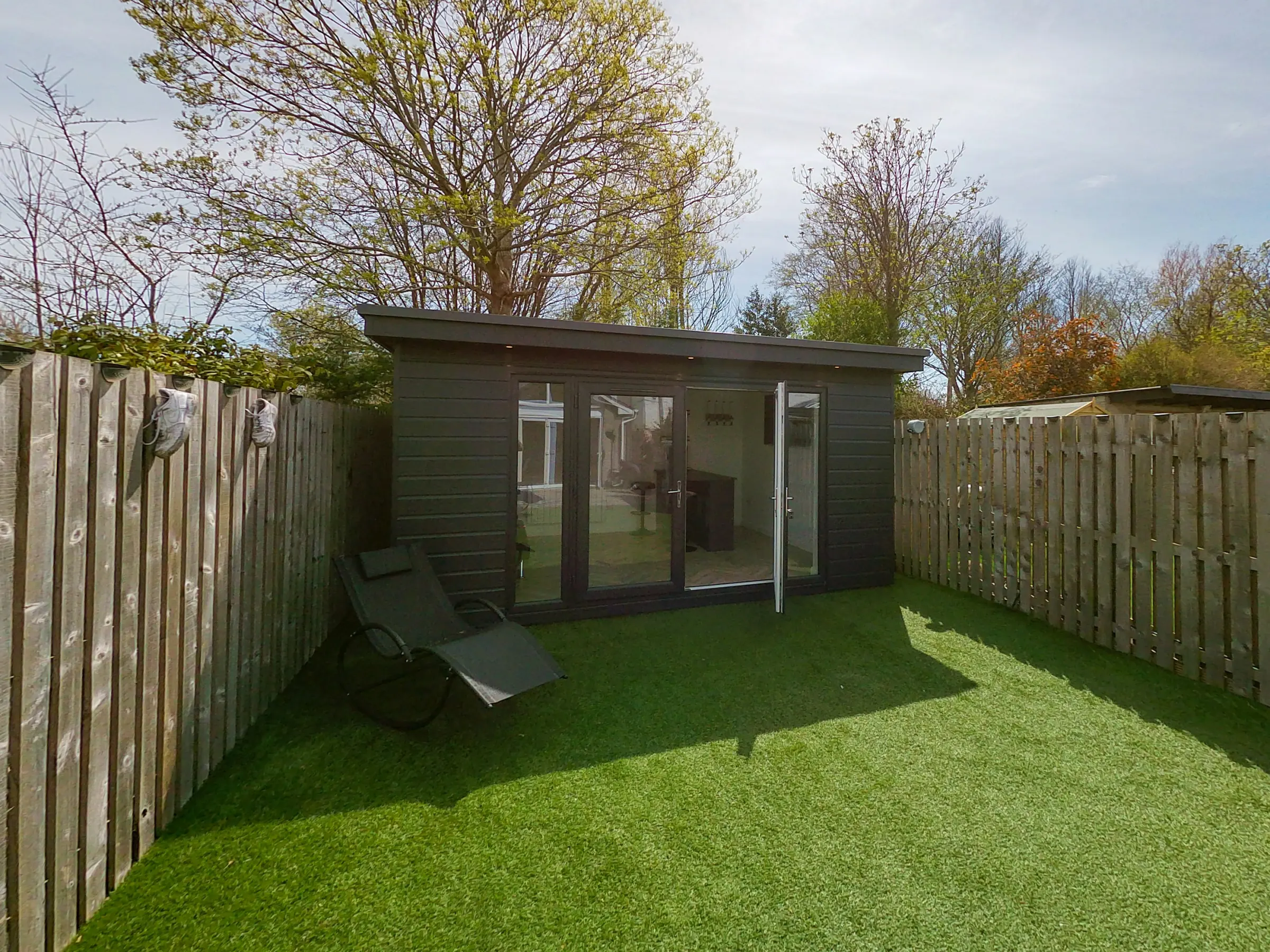
Do you need a robot mower garage?
No, but it can help. Robot mowers are built to work outdoors in rain and sun, and they come without a garage. A garage is worth it if the station stands in full sun, under trees that drop leaves and sap, or in view of the road. In a shaded, sheltered spot it adds little beyond looks.
Think about the problem you want to solve first. Heat, leaves and appearance are good reasons. Winter protection is not, because the mower should be stored indoors over winter anyway, as our guide to robot mower winter storage explains. Theft is only a partial reason: a garage hides the mower from view but rarely stops a determined thief.
What does a robot mower garage protect against?
Mainly direct sun, rain and falling debris. Strong sun heats the mower and battery while charging and fades plastic over the years. Rain on the station and contacts adds wear. Leaves, seeds, bird droppings and sap from trees collect on the mower's camera, sensors and top shell. A roof keeps most of that off.
For camera and LiDAR models, keeping the sensors clean is useful: a dirty camera lens or LiDAR window can affect navigation, and a garage reduces how often you wipe them. Some owners also use a garage to keep the station tidy and less noticeable, which matters in a small front garden.
Autumn is when a garage earns its keep. Leaves blow into the station, collect on the charging contacts and pile up on the mower, and wet leaves on the top shell can cover sensors and a rain sensor. A roof over the station keeps most of them off. It does not replace a quick sweep round the station every week or two in October and November.
Can a garage cause problems for the mower?
Yes, if it is too low, too narrow or in the wrong place. A low roof can catch the top of the mower, a LiDAR dome or an antenna. A tight fit makes docking unreliable. On RTK models, a roof over the mower can weaken the satellite signal at the station, and metal near a boundary wire can disturb it.
RTK mowers need a clear view of the sky to know exactly where they are, and the first and last metres of every run happen at the station. If the mower struggles to find its station after you fit a garage, check its height, move it back slightly from the docking spot, or choose a model designed by the maker for that mower. Our RTK vs LiDAR vs vision guide explains why the sky matters.
Camera-only models need light to see the station and the lawn edge, so a deep, dark box can make the first metres harder. LiDAR models need a clear line of sight around them; an open-sided garage is safer than a closed one.
Wood, metal or plastic: which garage material is best?
Wood looks natural and blends into a garden, but needs treating every few years. Plastic is light, easy to move and does not interfere with signals. Metal is durable but can disturb boundary wire and satellite signals on some models. For RTK and wired mowers, wood or plastic is the safer default.
Whatever the material, look for a sloping roof that sheds rain away from the station, an open front wide enough for the mower to drive straight in and out, and a design that can be lifted off or opened, so you can clean the station and reach the mower easily. Avoid anything that blocks the mower's lift handle or charging contacts.
What size should a robot mower garage be?
Larger than the mower on every side, with the roof well clear of its highest point, including any antenna, LiDAR unit or camera mast. Measure the mower and the station together, then add a margin in width and height so it can dock off-centre. Makers' own garages are sized for their models.
Mower sizes vary a lot. Larger models for big lawns and steep slopes are wider and taller than compact mowers for small gardens, and some have a sensor unit on top. Check the dimensions on the product page before buying a garage, and allow room in front of the station so the mower can line up straight, as the manual usually requires.
Where should the garage and station go?
On flat, firm ground at the lawn edge, with straight lawn in front, power within reach and, for RTK models, open sky around. Shade from a wall or hedge during the afternoon reduces heat. Keep it away from downpipes and hollows where water collects, and out of sight from the street if possible.
If the station is already in place, fit the garage without moving it, then watch a few dockings before leaving it. Our guide to robotic lawn mower installation covers station placement in detail, and robot mower security covers hiding the mower from view. If you are still choosing a mower, see how to choose a robot lawn mower and the robot lawn mower without perimeter wire comparison.
Common questions
Can I build my own robot mower garage?
Yes, many people do, from timber or a modified storage box. Keep the inside dimensions generous, leave the front fully open, avoid metal near the mower on RTK models and make sure rain runs off away from the station.
Does a garage make the mower last longer?
It reduces sun and rain exposure on the mower body and the station, which helps keep plastic parts from fading and leaves off the contacts. The makers design the mowers to work outdoors, so a garage is a comfort rather than a requirement.
Should the mower go in the garage over winter?
No. A garage is a cover, not winter storage. Most makers advise storing the mower indoors in a dry, frost-free place over winter.
Do makers sell their own garages?
Several do, including Worx and Segway, designed to fit their own mowers and stations. A maker's own garage takes the guesswork out of sizing and signal, which is the main reason to choose one.